Small Bowl, Big Afternoon: Why the Quiet Hour Deserves a Menu
There is a strange moment on a British high street, somewhere around the middle of the afternoon, when the lunch rush has gone and the dinner trade has not yet arrived. The coffee shops are still busy. The pubs are quiet. The noodle bar, if it is open at all, is often sitting there with its lights on and its till doing very little. That hour is not a problem to be endured. It is an opportunity with a lid on it.
The hour when the high street goes quiet
Most food businesses are built around two peaks: lunch and dinner. Everything else is treated as dead time, a gap to be staffed thinly and waited out. But the gap is not empty. It is full of people who are hungry in a slightly awkward way. Home workers who have been staring at a screen since nine and have missed the natural lunch window. Parents who have done the school run and want something hot before the evening collapse. Early takeaway eaters who like to eat at six and would rather not order at the same moment as everyone else. Shift workers. Students. People coming off a train. People who simply fancy a bowl at four o’clock and find the door locked.
Noodle bars are unusually well suited to this hour. A bowl is fast by nature. Broth can be held hot, noodles can be portioned, toppings can be set up. The equipment is already on. The question is not whether a kitchen can produce a smaller bowl at 3pm. It is whether the menu is designed to let it.
What an afternoon bowl should be
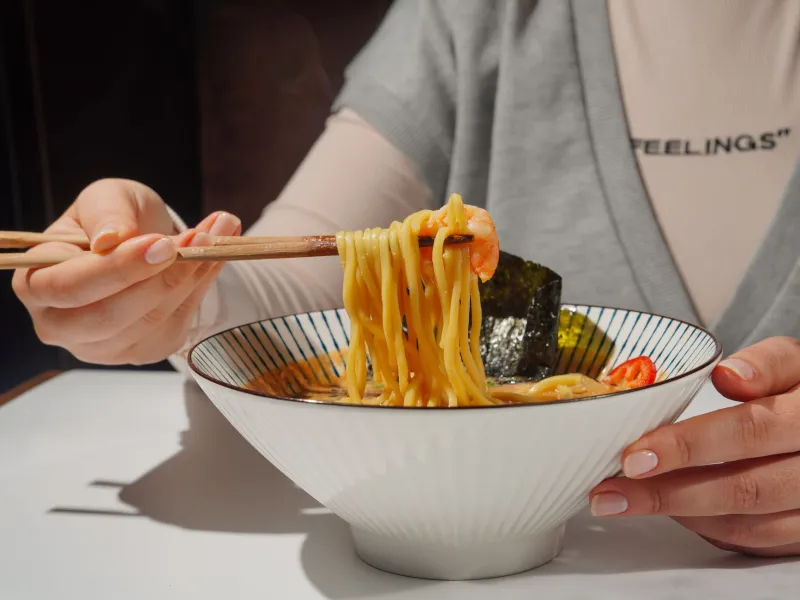
It should be smaller than the main event. Not a child’s portion, not a sad little side, but a genuine bowl with a clear beginning and end. Think one ladle of broth, a neat nest of noodles, a couple of toppings with texture, and a chilli crisp or vinegar at the counter. Enough to take the edge off the afternoon. Not so much that dinner becomes a chore.
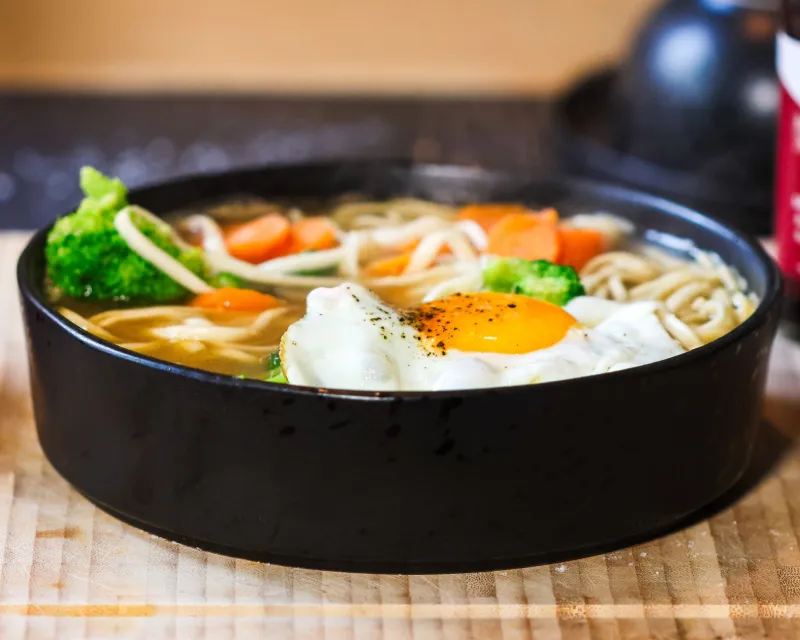
The flavour should be direct. This is not the time for a twenty-minute ramen project or a bowl that needs a diagram. A good afternoon bowl is broth-forward and bright: something with salt, heat and acid doing quick work. It could be a small bowl of curry noodles, a compact dry-tossed bowl with sesame and spring onion, or a short broth with mushrooms and greens. The point is not to shrink the main menu. The point is to build a separate little lane for the quieter hours.
A short menu is a kitchen kindness
Restaurants often resist afternoon menus because they imagine extra prep, extra staff and extra waste. But the opposite can be true if the menu is short enough. Three or four afternoon bowls, built from ingredients already in the kitchen, are easier to run than a full menu at half pace. One broth. One noodle. A handful of toppings. A smaller ladle. A clear price. That is not a second restaurant. It is a smarter use of the one you already have.
The kitchen benefits too. A short afternoon service keeps the pace gentle but the skills sharp. It gives staff something to do in the lull without asking them to pretend it is Friday night. It lets the bar test new toppings or limited bowls on a smaller audience. And it turns a silent hour into a small, useful revenue stream rather than a standing cost.
Who is actually eating at 3pm?
This is where the idea either works or falls over. An afternoon menu is not for everyone. It is for the person who wants a quick bowl before the school pickup, the freelancer who has forgotten lunch, the early diner who hates eating late, the takeaway customer who wants their food to arrive before the evening rush. It is for the high street worker on a break at an odd time. It is for the person who has just been to the gym and wants something hot and fast, not a full sit-down meal.
Those people do not need a big production. They need a door that is open, a menu they can read in ten seconds, and a bowl that arrives before they talk themselves out of it. That is the whole promise. Big bowls have their place. So do small ones, at the right time.
The no-fuss serve
The service should match the hour. Order at the counter. Take a number. Sit if you want, take it away if you do not. No table service, no lengthy specials board, no waiter asking whether you have booked. The afternoon bowl should feel like a pit stop, not a ceremony. That is not a downgrade. It is the correct format for the moment.
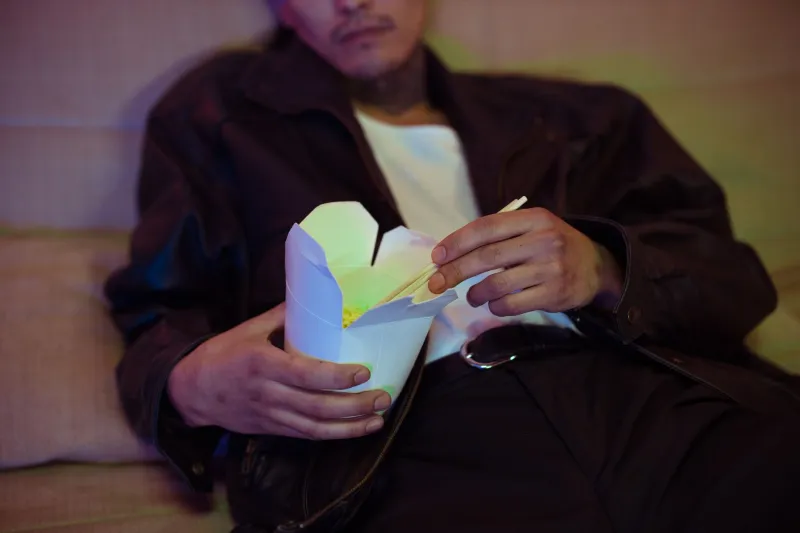
There is also a practical takeaway argument. A smaller bowl travels better than a giant one. It cools less slowly, fits more neatly into a bag, and does not demand a full dinner table when it arrives. For early takeaway eaters, that is a real difference. A bowl at 4pm should not require the same logistics as a family feast at 8pm.
Build it into the day, not around it
None of this needs to be complicated. Pick the quiet hours. Write a short menu. Price it honestly. Tell people it exists. Put a small sign in the window and a line on the website. The afternoon is not a secret, but the fact that a noodle bar will feed you at 3pm often is.
The high street does not need another full menu. It needs more places willing to feed people when they are actually hungry. A small bowl, served fast, with no fuss, is a very good answer to a very ordinary problem. The afternoon is already there. The menu should be too.