The Kitchen Verb Test: Choosing Takeaway Noodles by What Happens in the Pan
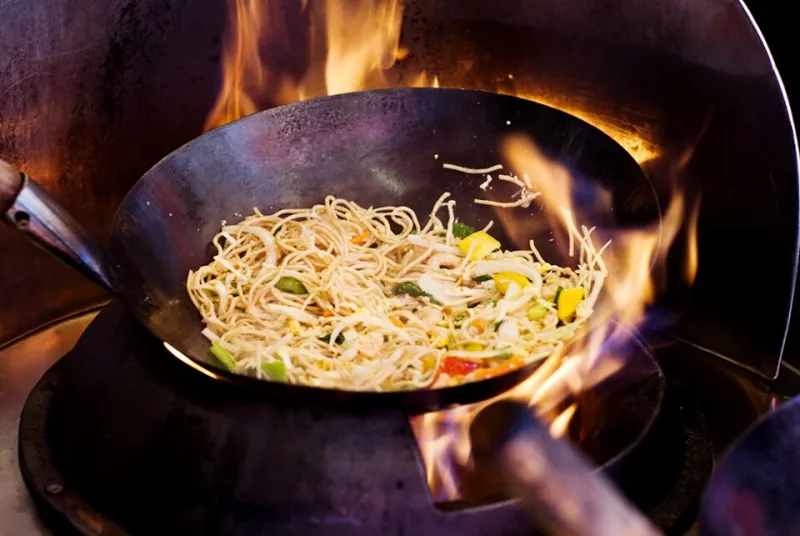
Photo: Wok to Walk International, S.L., CC BY-SA 4.0, via Wikimedia Commons
Takeaway noodle menus are written to be read fast. Usually at 7:42pm, with a phone in one hand and nothing on the hob. In that moment the loudest words win. 'Firecracker.' 'House special.' 'Singapore.' They land like a drum fill. The verb is often tucked into the small print: wok-fried, braised, tossed, simmered. That little word is the one that tells you how the bowl will actually eat when it reaches your door.
At V10 Noodle Bar we are biased towards big bowls and fast flavours, but the test works anywhere. Read the verb before you read the adjective. It is the difference between a bowl that arrives with a bit of life in it and one that has quietly given up in a paper box.
Adjectives are the poster. Verbs are the recipe.
A menu adjective is a mood. It tells you what the kitchen wants you to feel: excited, warm, adventurous, full. A verb is a method. It tells you what happened to the food before it was packed. 'Firecracker' might mean chilli oil, chilli powder, fresh chilli or a sauce that is mostly sweet with a warm finish. 'Singapore' is not a travel itinerary; on most UK takeaway menus it is a curry-powder note. 'House special' is whatever the kitchen is proud of this week. None of those words are useless, but none of them tell you whether the noodles will be glossy, dry, soupy or clumped.
The verb does. It sets texture, sauce level and travel tolerance. It also tells you how much control you have at the counter. If you know the verb, you can ask a useful question. If you only know the adjective, you are mostly asking the kitchen to guess your evening.
The four verbs to look for
Wok-fried
This is the takeaway classic for a reason. High heat, quick movement, a little char, sauce that clings rather than pools. Wok-fried noodles usually travel well because there is not a lake of liquid waiting to steam the box into a soggy mess. They can dry out a touch on a long journey, so they suit a ten-minute walk or a quick bus hop. If you are ordering for later, ask for sauce on the side or choose a bowl with a little extra glaze.
Braised
Braised means time. Meat or tofu has been cooked down in liquid until it is soft and generous, and the sauce is usually deeper and heavier. This is brilliant on a cold November night, but it is also the verb most likely to leak, slosh or arrive with noodles that have drunk up every drop. Braised bowls reward a short journey and a bowl you can eat with a spoon as well as chopsticks. If you are carrying it across town, hold the box flat and consider a side of extra broth rather than asking the kitchen to drown it.
Tossed
Tossed is lighter and faster. It suggests noodles dressed in a sauce, maybe with herbs, pickles or crisp bits, rather than cooked hard in the wok. Tossed bowls can be excellent, but they are more fragile in transit. Noodles clump when they cool, and a heavy sauce can make the whole thing feel like one texture. Ask for the dressing on the side if you have more than fifteen minutes between counter and couch. At home, give it a quick stir with a splash of hot water before you eat.
Simmered or broth-built
This is the verb that tells you the bowl is a liquid affair. Broth-built noodles are comforting, but they are also the least commute-proof. The noodles keep drinking, the broth cools, and the whole thing can turn into a stodgy mass if it sits too long. If broth is what you want, order it for eating straight away, not for a detour. Keep the broth and noodles separate if the shop offers it. If not, eat sooner rather than later.
The verb-first ordering framework
Start with your evening, not the menu. Ask yourself three things: how far am I from the counter, how hungry am I, and do I want to drink the bowl or chew it?
If the answer is a short walk and a big appetite, a wok-fried or braised bowl is a strong shout. If you are ordering for a group and one person is doing the pickup, favour wok-fried bowls and dry-style noodles; they hold their nerve better in a bag. If you are eating alone on the sofa and want something warming, broth-built is fine, but build the journey around it. If you are ordering early for later, tossed noodles with dressing on the side are a safer bet than a soupy bowl.
Then pick your base. Rice noodles, wheat noodles, ho fun, udon — each one behaves differently. Thin rice noodles drink sauce fast; thick wheat noodles hold heat and chew; ho fun is slippery and wide and needs a confident hand in the wok. The verb and the base together tell you more than any adjective ever will.
Then pick your heat. This is where the loud words can help, but only if you treat them as a rough guide. 'Firecracker' is not a number. Ask for chilli on the side if you are unsure. A bowl you can finish is better than a bowl that dares you.
What to ask at the counter
You do not need a food vocabulary. You need one useful question. Try: Is that wok-fried or tossed? Is the sauce cooked in or added at the end? Is the broth packed separately? Those three questions will tell you more about your dinner than a paragraph of menu poetry.
And if you are ordering from V10, or anywhere else with a short menu, remember the house rule: big bowls, fast flavours, no fuss. The verb is not a secret code. It is just the kitchen telling you how the bowl was made. Read it first. Then let the adjectives do their little song and dance.
The best takeaway noodle order is not the one with the boldest name. It is the one whose method matches your night. Find the verb, and you are already halfway to the right bowl.