Vent First, Slurp Later: The Case for Letting Your Noodle Box Breathe
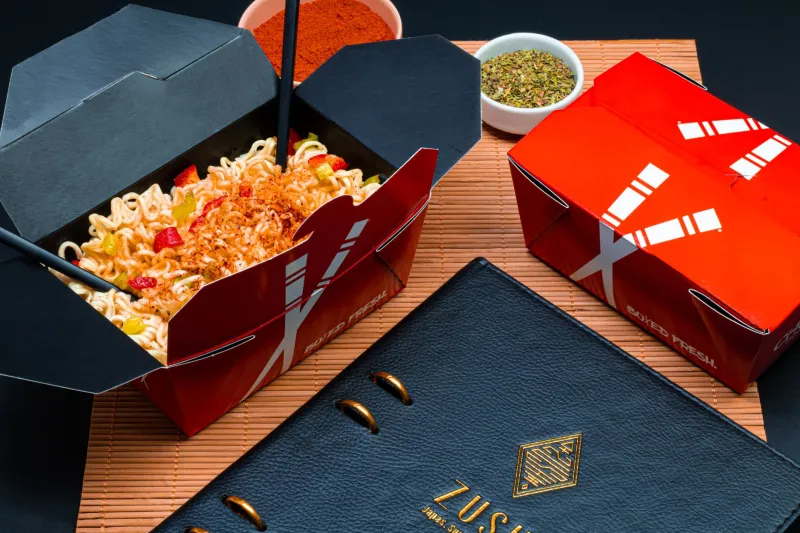
There’s a moment, about ninety seconds after a noodle box lands in your hands, when everything smells incredible and everything is quietly going wrong. The lid is on. The steam is up. The noodles are softening, the fried onions are going limp, and the top notes of your broth are getting muffled like someone put a duvet over a radio.
That’s not a tragedy. It’s just physics. But it’s also the difference between a good takeaway and a great one, and it costs nothing to fix.
The sauna problem
A takeaway noodle box is a closed system. Hot noodles, hot broth or sauce, a bit of residual heat from the wok — all of that moisture has nowhere to go. It rises, hits the cold underside of the lid, condenses, and then drips back down. Meanwhile, the air inside gets humid and heavy. Noodles that were springy start to go slack. Anything crunchy — spring roll shards, toasted sesame, crispy shallots, a handful of beansprouts — loses its nerve. And a broth that was sharp and savoury starts to taste flatter, because the aromatic bits you smell are exactly the bits you taste first.
You can’t stop steam. You can give it an exit.
The vent ritual: three small moves
This isn’t a ceremony. It takes less time than finding your keys.
1. Crack the lid as soon as you’re stationary. Not while walking, not on the bus, not balanced on a knee in the passenger seat. The moment you put the bag down — desk, kitchen counter, bench — peel back one corner of the lid. A triangle is plenty. You’re not opening the box, you’re giving it a chimney.
2. Wait two minutes. Actually wait. This is the hard part. Two minutes feels like an age when the box smells like that. Use the time to get a fork, pour a drink, take your coat off, text the person who asked you to grab them a bowl. The steam escapes, the condensation stops dripping back, and the noodles firm up rather than stew.
3. Re-cover loosely and eat. Don’t seal it again. Rest the lid back on with a gap, or leave it half off if you’re at home. The box stays warm, but it stops cooking itself.
That’s it. Crack, wait, loosen. It works on broth bowls, dry noodles, rice boxes, pretty much anything that comes with a lid and a bit of heat.
What a good lid tells you before you order
You can learn a lot about a noodle bar’s takeaway game from the packaging. A lid that vents — whether it’s a proper little steam hole, a paper strip that peels back, or a container designed to sit slightly ajar — is a lid that understands the journey. It’s the difference between a kitchen that thinks about the box and one that only thinks about the wok.
Look for lids with a small vent or a tear-back corner. Look for paper or foil that breathes rather than plastic that sweats. Look for a bar that packs crunchy toppings separately instead of burying them under a hot lid — that’s a kitchen that knows what steam does to texture. None of this is fancy. It’s just no-fuss thinking, the kind that says: we know you’re eating this ten minutes from now, and we’ve planned for it.
If your lid has no vent
Improvise. A plastic fork pricked through the top a couple of times does the job. So does peeling back a corner and resting it on the rim. If you’re at home, decant the noodles into a bowl and leave it for a minute — same principle, less packaging. If you’re eating at a desk, a folded napkin under one edge of the lid creates a tiny gap. It’s not elegant. It works.
The only thing you shouldn’t do is leave the box sealed and let it steam itself into submission while you answer emails. That’s how you get noodles that taste like they’ve been through a spa day they didn’t ask for.
The ten-minute window
Most takeaway noodles are at their best within about ten minutes of leaving the kitchen. The vent ritual buys you a few of those minutes back. It keeps the broth tasting like broth, the sauce clinging instead of pooling, and the crunchy bits doing their job. It also cools the bowl to a temperature you can actually eat, rather than the molten-lava stage that claims the roof of your mouth every Friday night.
So next time you order — whether it’s a big broth bowl for a dark November evening or a dry noodle box for a quick lunch — give the lid a job. Crack it, wait, loosen. The last ingredient isn’t in the kitchen. It’s the air you let in.