Sixty Seconds at the Door: The Noodle Handoff That Saves the Bowl
The best noodle bar in town can still be beaten by a bad handoff. You know the scene: the buzzer goes, you take the bag, thank the rider, close the door, and then spend the next two minutes doing everything wrong. Bag on the hallway floor. Lid pressed down tight. Bowl carried at a tilt while you kick off shoes. By the time you sit down, the steam has turned against you and the noodles have gone quiet.
A takeaway bowl is not judged only in the kitchen. It is judged at the door, in the lift, on the stairs, and in the thirty seconds before the first bite. The good news is that this is the cheapest part of the whole operation to get right. No new equipment. No chef-level technique. Just a small bit of choreography for the final minute.
Meet them at the threshold
The handoff starts before the rider reaches your door. If you know the food is close, stop what you are doing and clear a path. Shoes out of the way. A clear bit of counter. A tea towel ready. It sounds fussy, but a hot noodle order is a timed event. The bag should move from thermal carrier to your hands to a flat surface with as little wobble as possible.
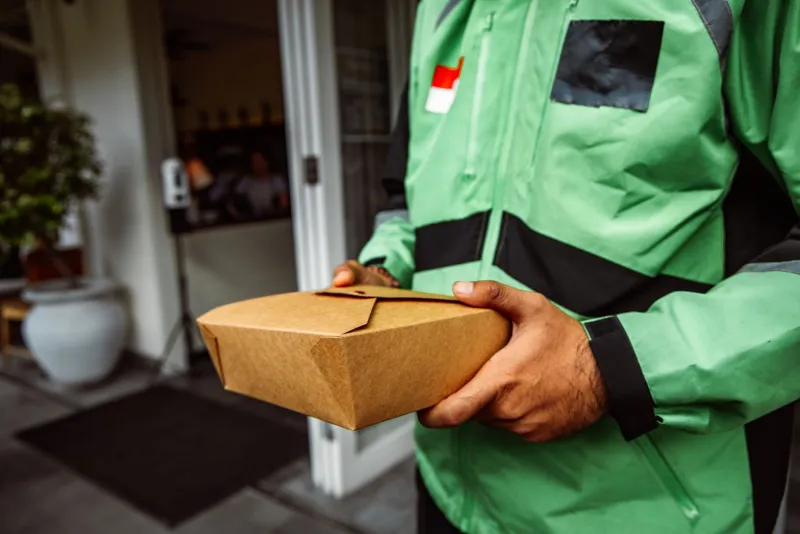
When you open the door, take the bag by the base, not the handles. Handles swing. Swing means tilt. Tilt means broth on the lid, noodles pushed to one side, and a sauce pot doing a slow slide into the corner. If the rider offers the bag with both hands, take it with both hands. A quick thank-you and a check that nothing is dripping is not rude. It is quality control.
The bag is not a bowl
Once the door is closed, resist the urge to carry the bag around the house like a handbag. Put it down flat. A hallway floor is not ideal, but a kitchen counter or table is better. If you are in a flat, use the lift ride wisely: bag level, base supported, no dangling. If there are stairs, hold the bag against your body with one hand underneath. Your body is a better shock absorber than a plastic handle.
This is also the moment to separate the crunchy things. If your order has a pot of chilli crisp, fried shallots, crushed peanuts or a little bag of crispy noodles, take them out now. They do not need to sit in the hot zone. A crunch layer that spends four minutes trapped above a steaming bowl is a crunch layer that has given up. Leave the hot stuff sealed, but let the dry stuff breathe on the side.
Steam is a texture problem
Most takeaway bowls arrive with a lid that is doing two jobs: keeping heat in and trapping moisture. Those two jobs fight each other. A tight lid keeps the broth hot, but it also turns the top layer of noodles soft and sends condensation down the sides. That is not a disaster. It is just something to manage.
If you have a short walk from door to table, leave the lid on. If you have a longer carry, or if the bag feels very steamy, crack the lid for the last thirty seconds. Not fully off. Just enough to let the worst of the trapped steam escape. Do this over a sink or a bowl, not over your carpet. Then put the lid back loosely and carry it flat.
At V10, we build bowls for speed and flavour, not for a slow parade through a hallway. But the principle holds anywhere: the first bite should taste like the bowl the kitchen sent out, not like a sauna.
Time the lid-off moment
This is the bit people rush. They open the lid the second they sit down, then spend two minutes finding a fork, moving the post, or answering a message. By the time they eat, the bowl has cooled and the noodles have clumped.
Do the boring things first. Sit down. Unwrap the chopsticks. Put the sauce pot within reach. Pour a drink. Then take the lid off. The lid-off moment should be the start of eating, not the start of faffing.
Once the lid is off, give the bowl one gentle lift and fold. Not a violent stir. Just enough to bring the broth back over the noodles and loosen anything that has settled. If the broth looks separated, a slow fold will bring it back together. If the noodles are stuck, add a splash of hot water from the kettle — a splash, not a flood — and fold again.
A word on sauces and sides
Takeaway noodles often come with sauces that are better added late. Chilli oil, vinegar, soy, sesame paste: taste first, then add. A bowl that has been steaming in a box does not need more salt by default. It might need acid, or heat, or crunch. Use the little pots as a finishing tool, not a pre-flight checklist.
And if you have ordered a side of dumplings, spring rolls or skewers, do not stack them on top of the noodle lid. They will go soft, and the noodle bowl will go cold. Keep hot things hot and dry things dry. It is not glamorous advice, but it is the difference between a good takeaway and a soggy one.
The sixty-second rule
None of this needs to be rigid. The point is simply to treat the doorstep as part of the meal. Meet the rider. Take the bag by the base. Put it down flat. Free the crunchy bits. Crack the lid if the steam is heavy. Sit down before you open it. Then eat.
Sixty seconds of attention at the door can save the texture, heat and crunch of the whole bowl. That is a better return than any fancy plate or extra sauce pot. Big bowls, fast flavours, no fuss — but a little bit of fuss at the threshold goes a long way.