Listen Before You Order: The Noisy Kitchen Test for Better Noodles
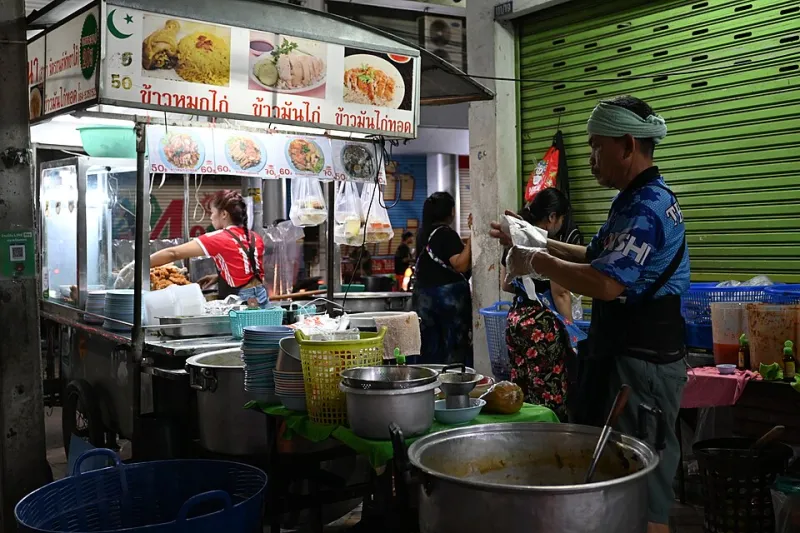
Photo: PattayaPatrol, CC BY-SA 4.0, via Wikimedia Commons
Walk past a proper noodle kitchen and you don’t just see the work; you hear it. There’s the clatter of a wok being shaken, the tap-tap of a ladle against a steel pan, the sudden rush of steam when a basket is lifted. It’s not chaos. It’s a set of signals, and they’re worth listening to before you order.
The order goes in
Imagine a Saturday evening at V10 Noodle Bar. You’ve ordered a bowl — say, a dry noodle with pork and chilli crisp. The ticket lands. The kitchen doesn’t pause for a team meeting. Someone grabs a handful of noodles, drops them into boiling water, and sets a wok over the flame. The first sound is a low roar as the gas catches. Then the wok shake starts: a rhythmic, metallic clatter as the pan is tossed. That shake isn’t for show. It keeps the food moving, stops it catching, and helps the sauce coat every strand. It also tells you the kitchen is working at speed. A wok that isn’t being shaken is a wok that’s either resting or burning something.
Wok hei, in plain English
You’ll see 'wok hei' on menus and in food writing, often with a lot of mystique. In plain English, it’s the smoky, savoury edge you get when food hits a very hot wok and gets tossed about. It’s not a sauce or a spice. It’s a result of heat, movement and timing. The wok needs to be hot enough to sear, but not so hot that everything scorches. The cook needs to keep things moving so the food picks up that charred aroma without turning bitter. When it’s right, you taste it as a kind of depth — a savoury hum that makes the bowl feel bigger than its ingredients. When it’s missing, the bowl can taste flat, even if the sauce is good.
The ladle tap and the steam rush
Then comes the tap of the ladle against the pan — a quick, practical sound. It’s the cook testing, scraping, adding a splash of stock or soy. That tap is a timing cue. It says the sauce is being brought together, not just poured. Next, the steam rush: a basket of noodles or greens is lifted, and a cloud of steam hits the air. That’s freshness you can almost see. It means something has just been cooked, not reheated from a tray. In a takeaway kitchen, that steam is a good sign. It tells you the bowl is being built to order.
From wok to box
The bowl moves fast. Noodles are drained, tossed, sauced, topped. The box is lined up. The lid goes on. The last sound is often the quietest: the press of a lid, the tap of a receipt, the call of an order number. From order to box, the whole thing might take less time than it takes you to find your keys. That speed isn’t a gimmick. It’s the point. Noodles are at their best when they’ve just been cooked and dressed. The longer they sit, the more they clump and the more the texture goes. A noisy, fast kitchen is usually a kitchen that understands this.
Why a noisy kitchen is often a fresher one
Silence in a noodle bar is suspicious. It can mean a kitchen is waiting for something, or that the food is being held. Noise — the wok shake, the ladle tap, the steam — suggests movement. It suggests that orders are being cooked in sequence, not batch-made and parked under a lamp. That doesn’t mean every loud kitchen is good, and every quiet one is bad. But sound gives you clues. A steady rhythm of wok shakes and ladle taps is a good sign. A kitchen that sounds like it’s working is usually a kitchen that’s paying attention.
The listening order
Next time you’re at the counter, listen for a second before you order. You don’t need to be a chef. You just need to notice. Is there a rhythm? Is the steam rising? Is the wok being shaken? If the answer is yes, you’re probably in the right place. At V10, we like a kitchen you can hear. It’s not noise for the sake of it. It’s the sound of a bowl being made properly — fast flavours, big bowls, no fuss.