The Plain-Text Bowl: Reading Past the Photos on a Noodle Menu
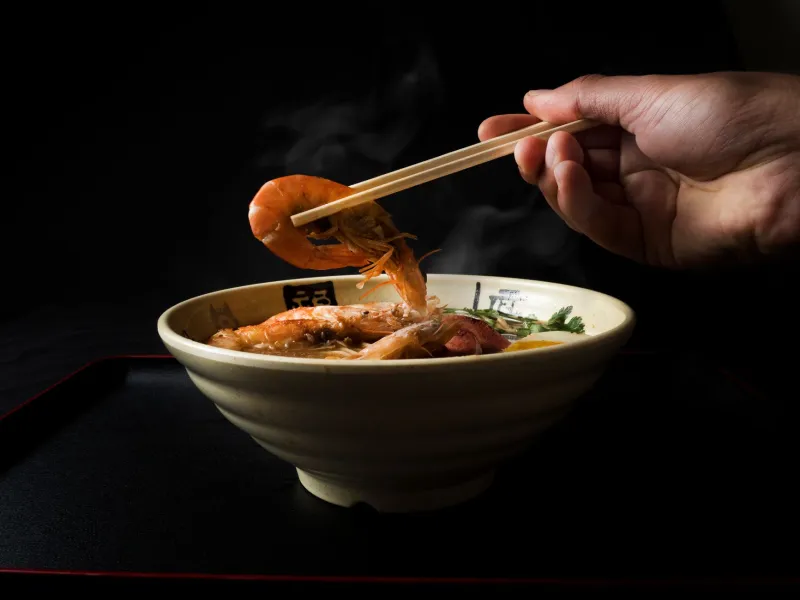
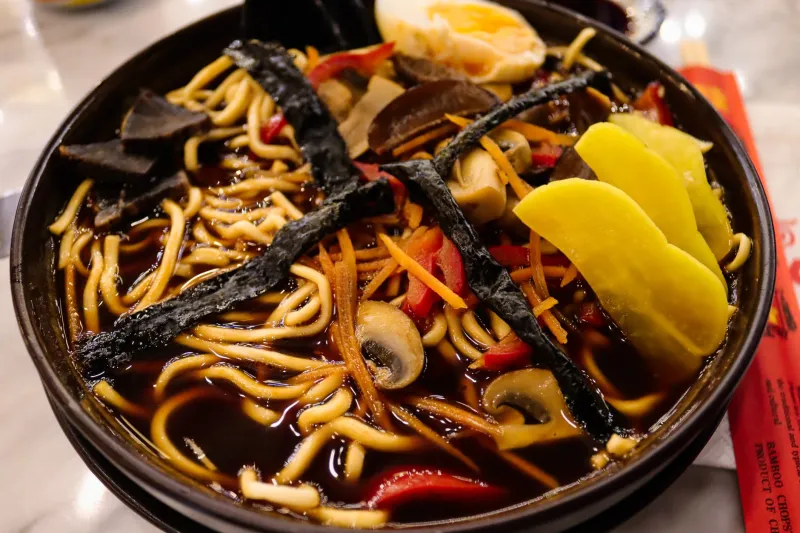
There is a particular kind of noodle menu that gives itself away before you have read a single word. Every dish has a photograph. The broth is glossy, the egg is centred, the chopsticks are arranged with the precision of a watch advert. It looks lovely. It also tells you almost nothing about how the kitchen actually cooks.
At V10 Noodle Bar we are firmly in the big bowls, fast flavours, no fuss camp, so this is not a sneer at good food photography. It is a warning about what happens when the picture does all the talking. On a takeaway app, the photographed bowls are usually the ones that travel well, stack neatly and survive a fifteen-minute ride without turning into a beige puddle. That makes them safe. Safe is not the same as interesting.
The text-only listings are where the real menu tends to hide.
Photos sell certainty, not character
A photograph is a promise of appearance. It says: this is what the bowl will look like when it arrives. Fair enough. But appearance is the least reliable clue to flavour. A pale broth can be thin or deeply savoury. A dark broth can be subtle or one-note. A bowl piled with sliced meat and fresh herbs may be lovely, or it may be a dish designed to look generous in a thumbnail.
When a menu leads with pictures, the kitchen is often steering you towards the dishes it can reproduce identically at volume. That is not automatically bad. A busy noodle bar needs consistency. But the dishes that reveal a kitchen’s personality are frequently the ones that look messy, brown, or hard to frame: braised things, pickled things, chilli oils, fermented beans, slow-cooked broths with a scum line that nobody is going to airbrush out.
So read the text first. Treat the photos as packaging, not as a recommendation.
Start with the first ingredient
Ingredient order is a small piece of menu grammar that most people skip. If a dish is listed as “braised beef, rice noodles, star anise broth”, the kitchen is telling you that the beef is the point and the broth is the supporting act. If it reads “star anise broth, rice noodles, braised beef”, the broth is doing the heavy lifting.
That distinction matters when you are ordering takeaway. A broth-forward bowl needs to be hot and well packed. A topping-forward bowl needs its components to hold their shape. A dish that lists three meats before any noodle or broth is usually a mixed grill in a bowl, which can be exactly what you want on a cold Wednesday in November, but it is not the same as a bowl built around a long-cooked broth.
Look, too, for what comes last. A garnish listed at the end is usually added at the pass, not cooked in. That tells you something about freshness and texture. A bowl that finishes with spring onion, coriander, pickled mustard greens or crispy shallots is trying to give you a lift at the end. A bowl with no garnish at all is often relying on the broth to carry everything. Sometimes that is confidence. Sometimes it is a shortcut.
Broth language is the tell
Noodle menus use a small vocabulary to describe broth, and the words are more useful than the pictures. “Clear” usually means a lighter, cleaner style. “Rich” or “creamy” points towards collagen, fat and longer cooking. “Spicy” is almost meaningless on its own, so look for the source: chilli oil, fresh chilli, fermented chilli, black pepper. Each gives a different kind of heat.
A broth described with one or two precise words is often more reliable than one buried under a pile of adjectives. “Pork bone broth, chilli oil, pickled greens” tells you more than “authentic spicy Asian-style soup”. The first is a set of ingredients. The second is a mood board.
This is also where you can spot the dishes that will travel well. Thin, clear broths are delicate but can go flat in a takeaway container. Thick, collagen-rich broths hold heat and coat the noodles. Chilli oil-based bowls tend to keep their punch. If you are ordering to eat on the sofa rather than at the counter, give the text a chance to tell you which one is built for the journey.
Garnish is a promise and a warning
A long garnish list is not automatically a good sign. It can mean the kitchen is assembling a lot of little things at the last minute, which is great when it works and chaotic when it does not. A short garnish list can mean focus, or it can mean the bowl is plain.
The useful question is: what is the garnish doing? Fresh herbs and lime are there for lift. Pickles are there for cut. Crispy shallots or crushed peanuts are there for texture. If a takeaway bowl lists something crunchy, ask yourself whether it is packed separately. If it is not, it will be soft by the time you open the lid. That is not a reason to avoid the dish, but it is a reason to eat it fast.
At V10 we like a garnish that earns its place. A little chilli crisp, a few pickled greens, a scatter of spring onion. No fuss, but not no thought.
Use the photo for the boring things
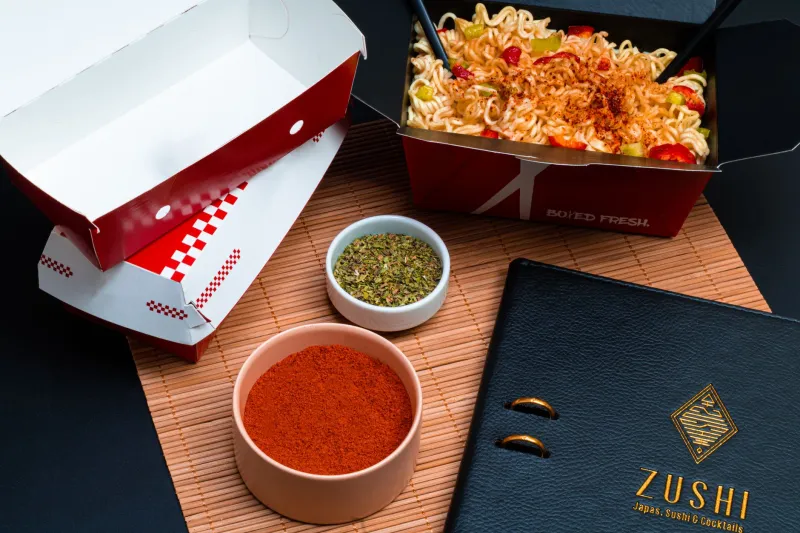
None of this means you should ignore pictures entirely. A photo is quite good at showing portion size, packaging style and whether the bowl looks like it has been constructed with tweezers or with a ladle. It can tell you if the noodles are likely to arrive clumped together. It can show you whether the takeaway box is the sort that leaks.
Just do not let it choose the dish for you. The prettiest bowl on the app is often the one that was designed to be photographed. The plain-text line underneath it is often the one the kitchen actually wants to cook.
Order the bowl that trusts its words
A short menu with clear ingredient lists is usually a good sign. It suggests the kitchen knows what it is doing and is not trying to be everything to everyone. If a noodle bar is happy to list a dish without a photo, it is often because the dish does not need to be sold on looks. It needs to be sold on broth, texture and heat.
So next time you are scrolling through a takeaway app, start at the bottom. Read the text-only listings. Look at the first ingredient, the broth description and the garnish. Then order the one that sounds like it was built for eating rather than framing.
Big bowls. Fast flavours. No fuss. The ugly one is often the best one.